
When a new client begins working with me, we start with a thorough assessment and an initial treatment. I begin this process with Greg Roskopf’s Muscle Activation Techniques®. With Muscle Activation Techniques or MAT®, I see the positions your body avoids, even positions you will not encounter in the entire Pilates method. The positions you avoid are associated with the decreased contractile ability of specific muscles, and that’s where my attention goes first.  The muscles you cannot easily access, not the ones that are already clear to you, are the most fruitful ones for us to address.

With a high degree of reliability, MAT improves the contractile capacity of your muscles. Improving the contractile capacity of your muscles improves your alignment and makes you more efficient and more resilient. This is the process for every client. Some clients come only for MAT to get out of pain; others, to improve their sports performance or to set the clock back a little every session. Clients who want to carry the concepts of alignment and appropriate increment of progression into their workouts while still having access to my skills as an MAT practitioner frequently choose to work out using the Pilates method. 
For more information or to book a session call us on 07446 872750 or email kirkjamessmith@nullgmail.com

Do you need Pilates or MAT?

How are they different? What are the different advantages and different outcomes of these two modalities?

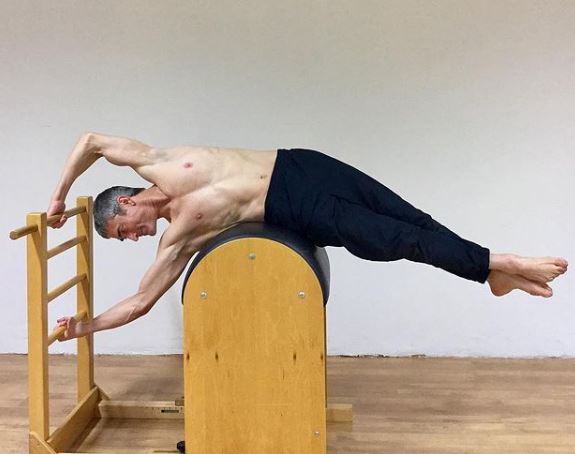
Pilates is a movement modality, a form of exercise that emphasizes how to respond to forces (especially gravity!) while staying focused on alignment. It teaches us to use an appropriate amount of tension in the right places. Mr Pilates famously said to never use ten pounds of force where one pound will do. He developed a system of exercise that evenly develops the body and emphasizes postural integrity. This integrity results from an emphasis on the control of deep muscles as we move.

Muscle Activation Techniques are not a movement modality, but an interactive treatment. Even though your session happens mostly on a treatment table, you are very focused and active the entire session. With MAT, once we have determined your apparent restrictions or limitations, we carry out low-force muscle tests, not to pronounce you strong or weak, but to determine which muscles are not very responsive or inhibited. Once we identify those muscles, we stimulate or activate them by using a light application of force to muscle attachment tissue and/or a series of light contractions in precise positions. We always retest our work. You leave the session with muscles functioning more harmoniously that were previously not so clear. With MAT we very efficiently help you restore function, strength, and range of motion. That is the result of focusing on improving the contractile ability of muscles.